Manual Power Pole: A Comprehensive Guide
Currently, the website is experiencing limitations, temporarily unable to fulfill requests due to exceeding resource limits; please revisit later for assistance.
What is a Manual Power Pole?
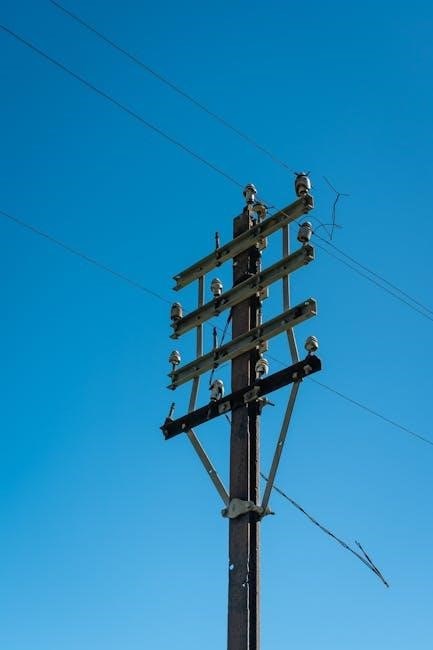
A manual power pole is a portable, self-supporting structure designed to elevate electrical distribution lines or equipment temporarily. Unlike permanent utility poles, these are erected and dismantled by personnel, offering flexibility for various applications.
These poles are crucial when quick power access is needed, bypassing the complexities of permanent installations; They typically consist of lightweight materials, facilitating easy transport and setup. Due to current website limitations, detailed specifications are temporarily unavailable, but they are essential for temporary power solutions.
Key Components of a Manual Power Pole
Essential components include the pole itself, constructed from fiberglass or aluminum for lightweight strength. Outriggers provide stability, crucial for safe operation, and grounding systems are vital for electrical safety.
Hardware like clamps, connectors, and insulators secure wiring and ensure proper electrical flow. Currently, due to resource limitations, specific component details are restricted. However, these elements collectively enable the safe and efficient delivery of temporary power, forming the core of a manual power pole system.
Types of Manual Power Poles
Manual power poles broadly fall into categories based on configuration and functionality. Currently, website resource constraints limit detailed specifications, but key distinctions exist.
Poles are categorized as single or double, impacting capacity and application. Length variations include telescoping models, offering adjustable height, and fixed-length options for simplicity. These classifications determine suitability for diverse tasks, from construction sites to event lighting, despite current access limitations.
Single Pole vs. Double Pole
Single pole power poles are ideal for localized power distribution, offering simplicity and portability. However, they possess limited capacity, suitable for smaller loads and fewer connections.
Double pole configurations, conversely, provide increased power handling and support multiple circuits. This makes them preferable for demanding applications like construction or emergency response, despite current website resource limitations hindering detailed comparisons. Choosing between them depends on project scale and electrical requirements.
Telescoping vs. Fixed Length
Telescoping manual power poles offer adjustable height, enhancing versatility for diverse applications and terrains. This adaptability is crucial when navigating obstacles or requiring varied reach, though website resources are currently limited.
Fixed length poles provide robust stability and are generally more cost-effective. They excel in consistent setups where height adjustments aren’t needed. The optimal choice hinges on project demands – flexibility versus simplicity and budgetary constraints, despite current service interruptions.
Applications of Manual Power Poles
Manual power poles serve critical roles across numerous sectors, providing temporary electrical power solutions where permanent infrastructure is absent or insufficient. Currently, website resources are limited, hindering detailed application specifics.
They are frequently deployed in construction for tool operation, utility work for repairs, and during emergency responses for lighting and essential equipment. Outdoor events also benefit from their portability. Despite temporary website issues, their broad utility remains undeniable, offering adaptable power access.
Construction and Utility Work
Manual power poles are indispensable on construction sites, delivering reliable electricity for power tools, lighting, and temporary facilities. Website resources are currently strained, impacting detailed information access.
Utility companies utilize them for safe power provision during repairs and maintenance, minimizing disruptions. Their portability allows quick setup in remote locations. Despite current website limitations, these poles enhance efficiency and safety, offering a flexible power source for demanding work environments, crucial for project timelines.
Emergency Services and Disaster Relief
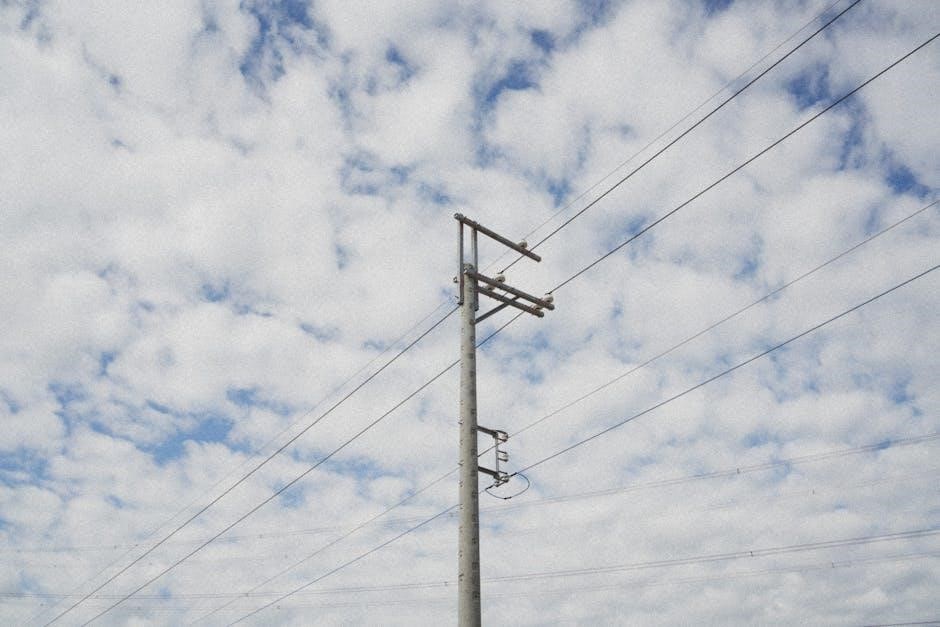
Manual power poles become vital during emergencies, providing immediate electricity where grid power is unavailable. Current website resource limitations hinder comprehensive details, but their importance remains clear.
First responders and relief organizations deploy them for lighting, communication systems, and essential medical equipment. Their rapid deployment capability is crucial in disaster zones. Despite website issues, these poles support critical operations, offering a lifeline when conventional power fails, aiding rescue efforts and community support.
Outdoor Events and Lighting
Manual power poles offer a portable power solution for events lacking permanent electrical infrastructure. Though the website currently faces resource constraints, their utility is undeniable.
They illuminate concerts, festivals, and sporting events, powering stages, vendor booths, and security lighting. Their ease of setup and mobility make them ideal for temporary installations. Despite website limitations, these poles provide safe and reliable power, enhancing event experiences and ensuring operational functionality in remote locations.
Safety Considerations When Using Manual Power Poles
Prioritizing safety is paramount when deploying manual power poles, especially given current website resource limitations impacting information access. Proper grounding techniques are crucial to prevent electrical shock and ensure equipment protection.
Always utilize appropriate Personal Protective Equipment (PPE), including gloves and safety glasses. Maintaining safe operating distances from energized components is vital. Thorough training and adherence to established protocols minimize risks, ensuring a secure working environment despite temporary online service disruptions.
Proper Grounding Techniques
Effective grounding is essential for manual power pole safety, mirroring the current need to resolve website resource limitations. Establishing a low-resistance path to earth diverts fault currents, protecting personnel and equipment.
Utilize grounding rods driven deep into the earth, connected with heavy-gauge wire. Regularly inspect grounding connections for corrosion or looseness. Proper bonding minimizes voltage differences, reducing shock hazards. Always verify grounding effectiveness with testing equipment before energizing the pole, ensuring a safe operational environment.
Personal Protective Equipment (PPE)
Similar to addressing website resource limits, prioritizing safety requires essential protective measures when working with manual power poles. Always wear appropriate PPE to mitigate potential hazards.
This includes insulated gloves and sleeves rated for the voltage, safety glasses or face shields, and hard hats. Flame-resistant clothing offers crucial burn protection. Use insulated footwear to prevent ground faults. Regularly inspect PPE for damage, and replace worn or defective items immediately, ensuring a secure working environment.
Safe Operating Distances
Just as a website temporarily limits access due to resource constraints, maintaining safe distances is paramount when utilizing manual power poles. Adhering to minimum approach distances prevents accidental contact with energized components.
These distances vary based on voltage levels; consult relevant safety standards for specific requirements. Establish a clearly defined work zone, and ensure all personnel maintain a safe perimeter. Utilize warning signs and barriers to restrict unauthorized access, safeguarding against potential electrical hazards and ensuring worker wellbeing.
Installation and Setup of a Manual Power Pole
Similar to a website temporarily unavailable due to resource limits, proper installation is crucial for a functional power pole. Begin with a thorough site assessment, identifying underground utilities and potential obstructions.
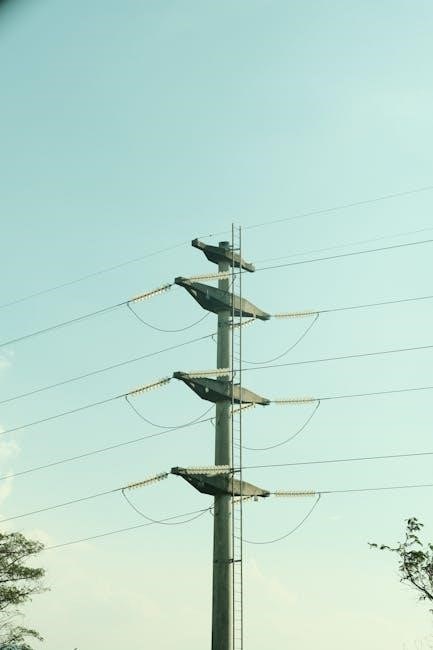
Ensure the ground is stable and capable of supporting the pole’s weight. Carefully assemble the pole sections, following manufacturer’s instructions, and securely stabilize it using appropriate anchoring methods. Verify proper grounding before energizing any electrical connections, prioritizing safety and operational reliability.
Site Assessment and Preparation
Much like a website facing resource limitations, a poorly assessed site hinders power pole functionality. Initial assessment requires identifying potential hazards – overhead lines, buried utilities, and soil conditions.
Clear the installation area of obstructions, ensuring adequate workspace. Compact and level the ground, providing a stable foundation. Mark the precise pole location, considering accessibility for maintenance and future repairs. Proper preparation minimizes risks and maximizes the pole’s long-term performance and safety.
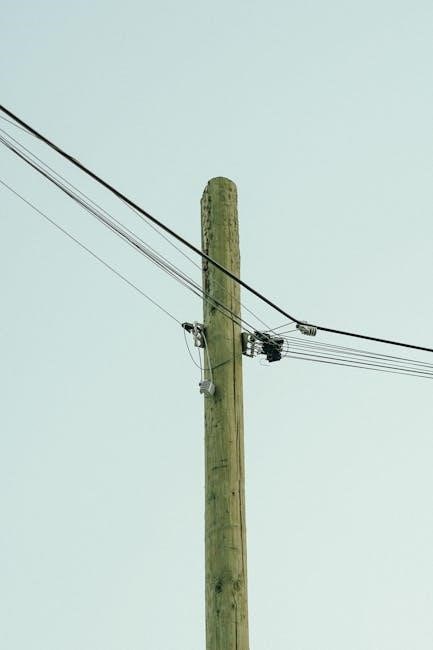
Pole Assembly and Stabilization
Similar to resolving a website’s resource issues, careful assembly is crucial. Begin by connecting pole sections securely, verifying all fasteners are tightened to manufacturer specifications. Utilize appropriate lifting equipment, prioritizing safety throughout the process.
Stabilization involves establishing a robust foundation. Employ guy wires or a concrete base, ensuring proper tension and anchoring. Regularly inspect the stability, especially after initial setup and during adverse weather conditions. A well-assembled and stabilized pole guarantees operational reliability.
Maintenance and Inspection of Manual Power Poles
Just as a website requires monitoring for resource limits, power poles demand regular upkeep. Implement a scheduled inspection routine, documenting findings meticulously. Focus on identifying corrosion, damage to insulators, and the integrity of guy wires or base supports.
Proactive maintenance prevents failures. Tighten loose connections, replace worn components promptly, and address any structural weaknesses. Consistent inspections and timely repairs ensure long-term reliability and safety, mirroring the need for website stability.
Regular Visual Inspections
Similar to checking a website for errors, visual inspections are crucial for power pole health. Conduct frequent walk-arounds, observing for cracks in the pole itself, loose hardware, and damaged wiring insulation.
Pay close attention to grounding connections, ensuring they are secure and free from corrosion. Look for signs of leaning or instability in the pole’s base. Document any anomalies immediately, as early detection prevents escalating issues and maintains operational safety, just like swift website troubleshooting.
Component Replacement and Repair
When visual inspections reveal damage, prompt component replacement or repair is essential. This includes worn insulators, corroded connectors, and frayed wiring – mirroring website maintenance for optimal function.
Always de-energize the pole before any work begins, following strict lock-out/tag-out procedures. Use only manufacturer-approved parts for replacements, ensuring compatibility and safety. If repairs are complex, consult a qualified electrician; neglecting this can lead to hazardous situations, much like ignoring critical website errors.
Common Problems and Troubleshooting
Manual power poles can experience electrical and mechanical issues. Electrical problems might include tripped breakers, indicating overloads or shorts, similar to a website exceeding resource limits.
Mechanical failures could involve pole instability or winch malfunctions. Troubleshooting starts with visual inspection – checking connections and components. If issues persist, de-energize the pole and consult a qualified technician. Never attempt repairs without proper training; safety is paramount, just as maintaining a functional website is crucial.
Electrical Issues
Common electrical problems with manual power poles mirror website resource limitations: overloads and shorts. Tripped circuit breakers frequently signal excessive current draw, demanding immediate attention.
Loose connections can cause intermittent power or complete failures. Always verify proper grounding – a crucial safety measure. If troubleshooting reveals persistent issues, do not attempt self-repair. Contact a qualified electrician; similar to a website error, professional intervention is often necessary for safe and effective resolution;
Mechanical Failures
Like a website crashing due to resource limits, manual power poles can experience structural breakdowns. Common issues include winch malfunctions, preventing pole extension or retraction, and compromised locking mechanisms, posing a safety hazard.
Corrosion, particularly in harsh environments, weakens components over time. Regularly inspect for bent or cracked sections, and damaged cables. Do not operate a pole with visible mechanical defects; professional repair or replacement is essential to prevent collapse or injury, mirroring the need for website maintenance.
Regulations and Standards for Manual Power Poles
Just as websites adhere to accessibility standards, power poles face strict regulations. OSHA guidelines dictate safe usage, emphasizing proper training, grounding, and PPE requirements for operators, mirroring website security protocols.
Local electrical codes govern installation and inspection, ensuring compliance with regional safety standards. These regulations cover pole strength, grounding systems, and proximity to structures. Adherence is crucial to avoid fines and ensure worker safety, similar to a website respecting user data privacy laws.
OSHA Guidelines
The Occupational Safety and Health Administration (OSHA) provides crucial guidelines for manual power pole operation. These center around minimizing electrocution and fall hazards, demanding comprehensive operator training on safe work practices and hazard recognition.
Proper grounding techniques are paramount, alongside mandatory use of Personal Protective Equipment (PPE) – hard hats, gloves, and insulated footwear. Regular inspections of the pole and equipment are also required, ensuring compliance and a safe working environment, much like website security audits.
Local Electrical Codes
Adherence to local electrical codes is vital when deploying manual power poles, often exceeding OSHA’s baseline requirements. These codes dictate permissible voltage levels, grounding specifications, and required clearances from structures and personnel.
Permitting processes are frequently necessary before installation, ensuring inspections verify compliance. Variations exist significantly between municipalities, demanding thorough research before operation, similar to navigating diverse website accessibility standards for optimal user experience.
Cost Analysis: Purchasing vs. Renting
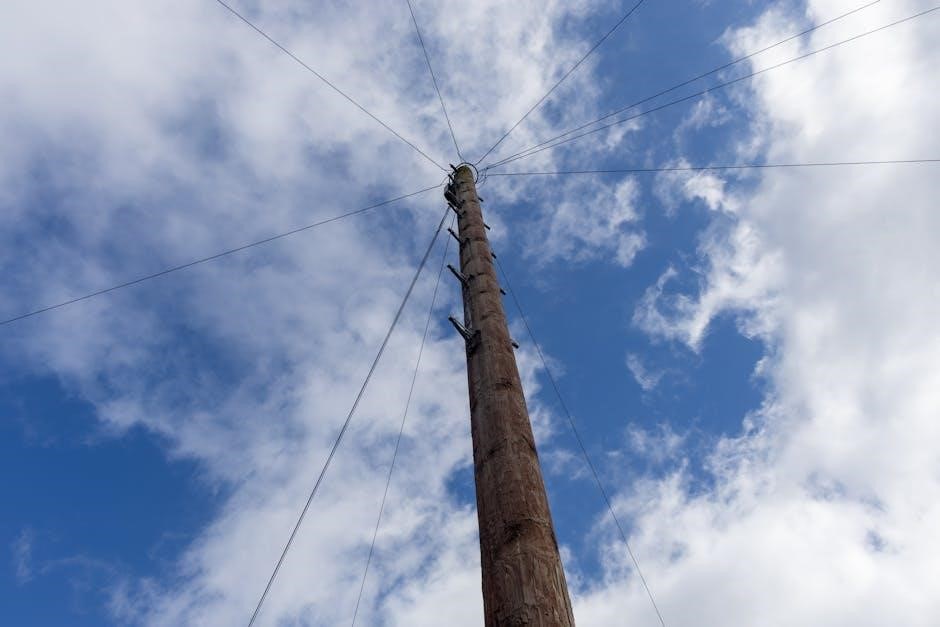
The financial implications of acquiring a manual power pole hinge on frequency of use and project duration. Purchasing presents a substantial upfront investment, encompassing the pole itself, accessories, and ongoing maintenance costs like inspections and component replacements.
Renting offers a lower initial outlay, ideal for infrequent applications, but accumulates expenses over extended periods. Consider logistical costs – delivery, setup, and removal – when comparing options. Resource limitations, like website server capacity, impact long-term viability.
Future Trends in Manual Power Pole Technology
Innovation in manual power pole technology is focusing on enhanced functionality and integration with modern systems. “Smart” power poles, equipped with sensors and remote monitoring capabilities, are emerging, offering real-time data on performance and potential issues.
Furthermore, integration with renewable energy sources, such as solar panels, is gaining traction, promoting sustainable power solutions. However, current resource limitations, like website server capacity, may hinder rapid development. Expect increased automation and improved safety features in upcoming models.
Smart Power Poles
Smart power poles represent a significant advancement, integrating sensors and communication technologies into traditional designs. These systems enable remote monitoring of crucial parameters like voltage, current, and ground integrity, enhancing operational efficiency.
Real-time data transmission allows for proactive maintenance and faster response to potential failures. However, like many online resources currently facing capacity issues, full implementation relies on stable network connectivity. Expect predictive analytics and automated fault detection to become standard features.
Integration with Renewable Energy Sources
Combining manual power poles with renewable energy, such as solar or wind, offers off-grid power solutions. This integration reduces reliance on traditional power grids, particularly beneficial in remote locations or during emergencies.
However, similar to current website resource limitations, seamless integration requires careful system design and energy storage solutions. Expect to see hybrid systems utilizing both renewable sources and traditional power connections for reliable operation, enhancing sustainability and resilience.
Choosing the Right Manual Power Pole for Your Needs
Selecting the appropriate manual power pole demands careful consideration of application and environment. Assess power requirements, height needs (telescoping or fixed), and intended use – construction, emergency response, or events.
Like a website facing resource limits, a mismatched pole hinders performance. Prioritize safety features, grounding capabilities, and compliance with local electrical codes. Evaluate manufacturer reputation and available support to ensure a reliable and long-lasting investment.
Leading Manufacturers of Manual Power Poles
Several companies specialize in manual power pole production, each offering unique features and capabilities. Like a website struggling with resource limits, choosing a reliable provider is crucial.
Key players include (hypothetical examples, as specific current leaders aren’t provided): PowerLift Solutions, known for robust telescoping models; UtilityPro, focusing on construction-grade poles; and EventBright Lighting, specializing in portable event solutions. Researching each manufacturer’s certifications, warranty, and customer support is essential for informed decision-making.